
The Original “Jesus Revolution”
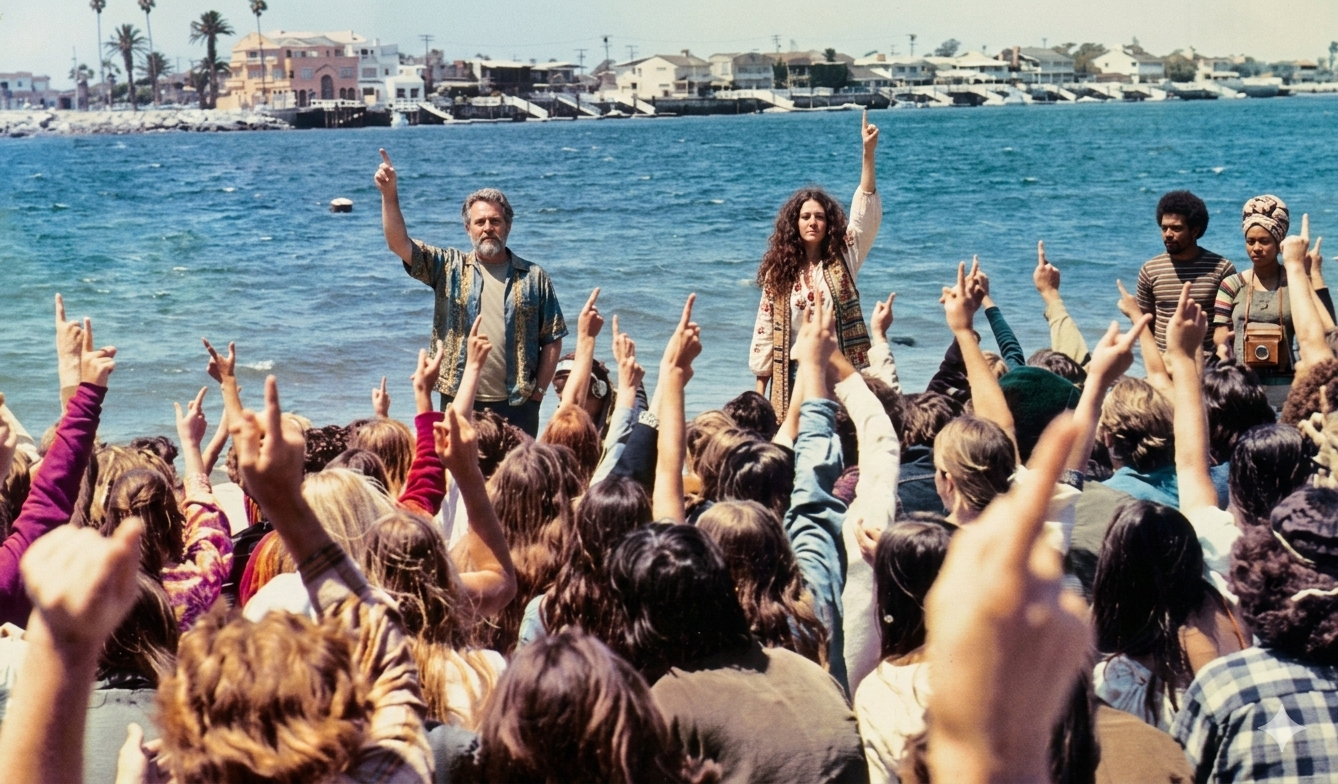
In the late 1960s and early 1970s, a generation came of age amid unrest, disillusionment, and unanswered questions. The promises of the counterculture were loud, but for many young people, they rang hollow. In Southern California, something unexpected began to take shape not in protest lines or political movements, but in churches, living rooms, coffeehouses, and along the Pacific shoreline. What followed would come to be known as the Jesus Revolution. The term entered the national consciousness in 1971 when TIME magazine put it on its cover, documenting a growing spiritual awakening among young Americans who were turning from drugs, despair, and cultural excess toward faith in Jesus Christ. At the center of that movement stood an unlikely convergence of people, places, and purpose. One of those drawn into it was Greg Laurie, then a searching teenager navigating instability at home and uncertainty about life. Like many of his peers, Laurie was looking for meaning that could withstand reality. He found it not through ideology, but through faith, in a movement that welcomed questions and offered truth without pretense.The epicenter of the awakening was Calvary Chapel in Costa Mesa, led by Pastor Chuck Smith, a steady, Bible-centered teacher whose conservative congregation was about to encounter something entirely new. That catalyst arrived in the form of Lonnie Frisbee, a charismatic young evangelist whose appearance, language, and background mirrored the very generation Smith’s church struggled to understand. To many, it seemed an unlikely and unconventional partnership. In reality, it was the beginning of a movement by God’s design. Smith brought structure, experience and pastoral grounding. Frisbee brought reach, authenticity, and urgency. Together, they created space for thousands of young people who felt unseen by traditional institutions but deeply drawn to scriptural truth. Soon, Calvary Chapel could not contain the crowds. Services multiplied. People sat on floors and patios. A tent went up, then a larger sanctuary. Worship music evolved organically, with guitars and lyrics that reflected the lives of those singing them. What began in that movement would help give rise to what is now known as Contemporary Christian Music, as pioneering voices like Larry Norman, Love Song featuring Chuck Girard, Keith Green, Phil Keaggy, and Andraé Crouch carried the message beyond church walls and into a generation hungry for true love. What started as an expression of faith among a small community would influence church culture across the nation and beyond.
Perhaps the most enduring image of the movement was baptism in open water. Young men and women, many newly sober, newly hopeful, stepped into the ocean to publicly declare their faith. For onlookers, it was captivating. For participants, it was transformational.
Greg Laurie was among those whose life took a decisive turn during that time. He would eventually become a pastor and evangelist, founding Harvest Christian Fellowship and leading large-scale evangelistic gatherings known as the Harvest Crusades, carrying forward the same message that first reached him as a teenager: the gospel, plainly spoken, openly offered, and wrapped in unconditional love.
The Jesus Revolution was not only about mass gatherings. It was deeply personal. For Laurie, it also shaped his marriage and family. He met his wife, Cathe, during this movement and their relationship developed alongside their shared faith. Their story, later depicted in the film Jesus Revolution, reflected the reality of young believers learning commitment, conviction, and perseverance while building a life centered on Christ.
More than half a century later, the significance of that movement resurfaced through film, introducing the story to a new generation, many of whom had no idea of the powerful movement of faith that had taken place in generations past. Greg Laurie’s involvement was not driven by nostalgia, but by conviction. He has often said the goal was not to relive the past, but to remind people what is possible when faith is lived openly and sincerely.
Even I can testify to its impact. As a millennial who grew up in the church my entire life, I was completely unaware of the great Jesus Revolution that had happened prior to my birth. Watching the film stirred something deep within my spirit. As the closing scenes rolled and the 1971 Time Magazine cover appeared on the screen, I felt the Holy Spirit speak clearly to my heart: L.A. STYLE Magazine must put Jesus on the cover.
If a secular publication could document the movement from an unbiased journalistic perspective, how much more powerful could it be told from a place of conviction and testimony? As Editor in Chief and Managing Partner, stewarding this legacy publication alongside my husband, I knew this was more than an editorial decision. It was a declaration. A decision to publicly profess our faith. A commitment to not be ashamed to lead a media company that is both rooted in and guided by biblical principles.
And to boldly announce what we believe is happening in our midst once again: A new Jesus Revolution.
The original Jesus Revolution did not rely on strategy or spectacle. It grew because doors were opened, differences were bridged, and the message remained central. Young people came not because faith was fashionable, but because it was real.
In an era marked by cultural upheaval, the surprise was not that a generation was searching for meaning. The surprise was where they found it.
The legacy of the Jesus Revolution is not confined to history books or film reels. It lives on through lives changed, churches reshaped, and voices like Greg Laurie’s that continue to echo a simple truth: faith, when offered with clarity and conviction, still has the power to transform.
And now, it rises again.
Among the young and the old.
Across the marketplace and in the church.
A new wildfire of love, power, and grace is upon us.
The new Jesus Revolution is upon America.
The only question is: Who will answer the call?
Written By Tricia Love Trujillo, LA Style Magazine Editor-In-Chief & Co-owner
